

OTT HydroMet Solar Energy articles
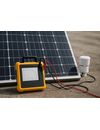
PV module IV curve is a powerful diagnostic tool for understanding how a photovoltaic module actually performs under real-world conditions. It shows how current and voltage interact and helps verify system health, detect performance losses, and support reliability assessments for engineers, O&M teams, EPCs, and asset owners.
This guide explains what a PV module IV curve is, how to interpret it, what it reveals about system behavior, and why accurate environmental measurement is essentia
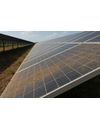
Soiling—accumulation of dust, dirt, pollen, agricultural residue, and other airborne particulates on PV module surfaces—causes light transmission losses and measurable power reductions. While its impact on ongoing operation is well established, soiling also affects capacity and performance testing, where even small losses can carry contractual and financial implications. Field studies indicate soiling losses of approximately 1–2% can influence capacity outcomes in utility-scale plants,
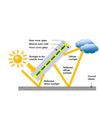
Over the last year Kipp & Zonen has received a lot of questions about albedometers from customers working in the Solar Energy market. These came from engineers and researchers working with bifacial PV modules.
Bifacial simply means that the back of the PV module has a glass panel, instead of an opaque metallized backing, and can collect li
OTT HydroMet
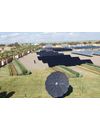
One of the first customers to use DustIQ was Green Energy Park in Morocco, to support research field tests.
Since February 2018, OTT HydroMet's DustIQ Soiling Monitoring System has been on their site and measuring t
OTT HydroMet
Voilà, here is the third issue of OTT HydroMet Insights! This time, we take a detailed look at the solar energy landscape, international standards, new applications and technologies.
Around the world, the demand for renewable energy is growing. Photovoltaics play a key role in this trend. To monitor the performance of PV plants, accurate, reliable, and easy-to-integrate measurement solutions are key.
In this edition of the Solar Energy Insights, we would
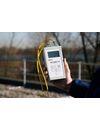
Do you want to check your installed pyranometer on site?
With the METEON 2.0 handheld data logger you can connect directly with any of our pyranometers. Smart or analogue, and see real-time measurement values.
Simple, quick, convenient and accurate.
Easily Check Kipp & Zonen Instruments on Site
METEON 2.0 can be connected to any of our pyranometers and provide you with real-time measurement values. Helpful when, for example
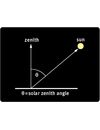
Many people have asked us for an illustration that gives a simple overview of the three components of incoming short-wave solar radiation: direct, diffuse and global. We've created a drawing that we hope will make this clear.
Direct Radiation
The basis of the measurement is a SOLYS 2 sun tracker pointing a CHP 1 pyrheliometer at the centre of the sun. The CHP 1 has a full opening view angle of 5° and measures the normal incidence direct irradiance from the
Kipp & Zonen
China’s National Energy Administration (NEA) announced a total PV installation target of 18.1GW for 2016, within which 12.6 GW are for standard types of PV installations, including both ground-mounted PV and distributed PV projects.
Six universities from South Africa, and one each from Île de la Réunion (Reunion Island) and Botswana, are cooperating in the Southern African Universities Radiometric Network (SAURAN), to promote the use of solar energy in the Southern Africa Development Community (SADC) countries, and to improve the quality of satellite-derived solar data available for the area.
Wikus van Niekerk
Understanding global climate change is a complex process, because small variations in hard to measure variables can turn into major impacts on a global scale.