


H2ecO - Low Energy Lighting
Replacing your traditional light bulbs with low-energy equivalents can make a dramatic impact on the overall usage of electricity in your home - and save significant sums of money every year. Lighting your house is often overlooked as a significant expense. On average about 8% of your household`s energy bill is from lighting. Traditional tungsten lights are a very inefficient way to light your house as only about 5% of the electricity they use is converted into visible light.
There are various types of low energy lighting available for domestic use, a simple bulb replacement will save between £3 - £4 per year.
Modern bathrooms and kitchens are often lit by several bulbs, these are normally 50W Halogen down lighters. By the time you add up the total wattage in your house you will soon realize the amount of power being used.
If you have six Halogens in your kitchen and four in your bathroom you will have a total wattage of 500W just between these two rooms. Replacing theses bulbs with LEDs will save you about £40 per year. Another huge benefit of changing to low energy bulbs is that they last an amazing 50 000 hours. This means that once installed as well as saving money on energy you will also not have to replace them on a regular basis as with traditional bulb types.
Of course, we can also save a lot of wasted electricity by switching lights of when there is no one in the room!
There are two main types of energy efficient bulbs available for domestic use:
-Compact Flourescents (CFLs) -These are the type of energy efficient bulb that most people have used and are widely available as a standard swap for general purpose bulbs.
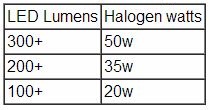
-LEDs These are even more efficient than CFLs and are the ideal replacement for halogen lamps. Although more expensive than CFLs they last a lot longer and are used in specialized applications such as fitting in flush ceiling lights.
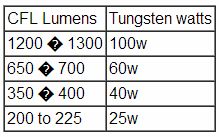
Early examples of energy efficient lighting produced poor results either from a colour of a brightness point of view. If you are worried about the brightness of energy saving lamps you will now be able to look at the packet for a guide to the brightness. Look for the Lumens as a guide to light output as watts only give you a guide to the amount of electricity they use.
If you are replacing Tungsten lamps for CFLs you should use the following table for comparison:
There are numerous types of larger low energy lighting systems available for outdoor and commercial use.
If you require supply and installation of new light fittings our electricians can recommend the best options to ensure that we can supply and install the best system for your application.
We have many years experience in large-scale high output energy efficient lighting systems so we would be happy to advise you on any queries you have on energy efficient lighting systems.