


- Home
- Companies
- SEPAC Corporation
- Products
- Sepac - Model RAV 1101- 1111 - Static ...
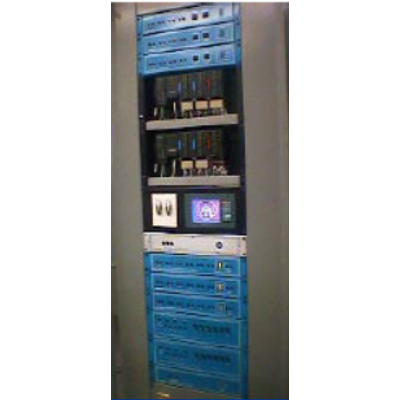
Sepac - Model RAV 1101- 1111 -Static Digital Excitation System
The RAV 1101/1111 static excitation system is designed to operate with Generators ranging from a few Mega Watts up to 600MW regardless of the rotor`s characteristic (Brushless or direct excitation type).
The system basically consists on an excitation transformer that is connected to the Generator`s output, an enclosure with the regulation electronics, the Power Converter or Stack, the ancillary CTs and PTs for metering and the Remote Logic Control.
The excitation transformer, feeds the RAV 1101/1111 through the Generator`s voltage terminals, as shown on the Block Diagram.
The transformer`s secondary voltage is specified to achieve the maximum voltage specified by the Power Stacks that correspond to the top admissible voltage according to the Generator`s characteristics.
The RAV 1101 / 1111 is comprised of several functional modules that work together to perform the following tasks in a coordinated manner:
- Unit start-up, excitation of the generator using the utilitys batteries, adjusting the generator´s voltage to nominal value in a minimum amount of time in a controlled manner.
- In normal operation, it rectifies excitation transformer´s voltage to apply it to the generator´s rotor and control the output power (automatic channel) or excitation current (manual channel).
- Maintain the generator´s voltage within the limits of normal operation controlling excitation and without exceeding the generator´s capability limits.
- Stabilize dynamic conditions of the interconnected systems and participate in the voltage regulation of the system.
- Supervise the functional state of the regulator alarming or triggering if operating conditions are not normal.
- Transfer from Automatic to Manual channel if excitation voltage or current stepout of their normal operation range.
- Prepare automatic transfer from voltage regulator (auto channel) to current regulator (manual channel) in case of fault, positioning the trigger angle using a follower circuit.