

LAMBDA Gesellschaft für Gastechnik mbH products
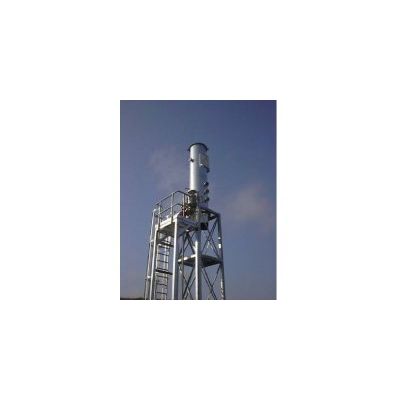
LAMBDA - High-Temperature Flare
The LAMBDA landfill gas flare is used to combust the methane or sludge gases arising from anaerobic processes in landfills. Combustion takes place from the lower edge of the flare cap with a high level of excess air at a temperature of at least 1,000 °C. The flare cap has inner ceramic fibre insulation which can withstand temperatures of up to 1,430 °C. Lamellar air valves ensure a constant combustion temperature. The air not required for the chemical conversion serves as cooling air. Air supply is effected by the natural draught principle. The surface turbulent burner ensures thorough mixing of the combustion air with the respective gas so that the control temperature is achieved in the lower section of the flare cap. This guarantees a homogenous temperature istribution in the combustion chamber.
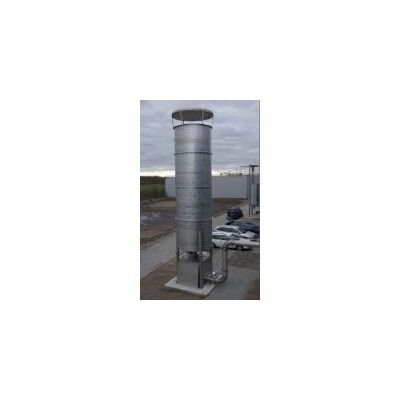
Biogas Flares / Sludge Gas Flares
The LAMBDA biogas and sludge gas flare serves as an inspection and safety device at biogas and sludge gas plants for the thermal treatment of excess gas. Since the continuous process of gas production in these plants can only be influenced to a slight extent in the event of a failure of the utilisation plant, the LAMBDA flare safely disposes of the biogas not collected in the gas storage. This prevents odour nuisance in the surroundings and the emission of air pollutants.
Otto Gas Engine
LAMBDA together with its cooperation partner provides otto gas engines especially for the use of landfill gas flows of below 200 m³/h in the output range 80 kW to 250 kW. An optimised gas mixing and gas mixing control mean these units can be operated at a methane concentration of up to 35 %. The use of innovative materials and lubricating oils permits maintenance intervals of 800 to 1,000 operating hours. The combination of long maintenance intervals and inexpensive spare and wearing parts makes profitable operation of these otto gas engines possible even at low power. The standard integrated telemonitoring and telecontrol system means profitable operation of these machines can even be achieved over great distances by an external operator or contractor. The excellent starting characteristics mean cycle operation can be run despite differing methane concentrations.