


- Home
- Companies
- IET Energy GmbH
- Products
- IET Energy - Combined Heat and Power ...
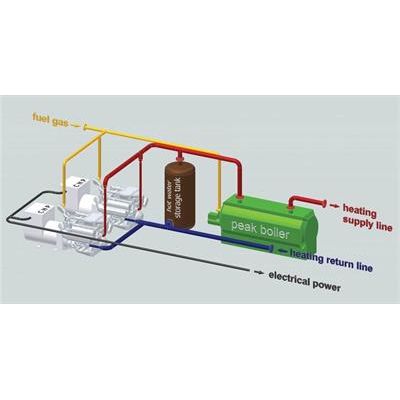
IET Energy - Combined Heat and Power System (CHP)
The cogeneration plants work according to the principle of Combined heat and power (CHP). Using this principle the gasous primary energy carrier (natural gas, liquid gas, biogas, sewage gas, or special gas) is converted into mechnical energy in a specially designed gas engine.
A highly efficient synchronous generator converts the mechanical energy into electrical energy. The electrical power can be consumed inside the own grid, or it can be exported into the public electrical grid.
The produced thermal heat energy from the engine and the thermal energy from the exhaust gas is used for heating up the living space and for heating up service water. Furthermore the excess heat from the exhaust gas can be offered as process heat or production of steam.
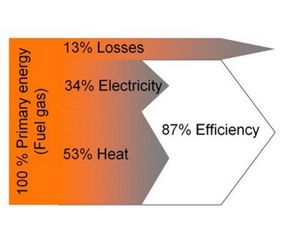
Because of the combined generation of heat and power the cogeneration plants of IET show a total efficiency of around 90% which is considerably higher than with the conventional processes with separated generation of heat and power. Not using the excess heat a nuclear power plant or a coal power plant only achieves an efficiency of 33-38%; 50% of the primary energy is lost.
Low power production cost
Producing power and heat at the same time reduces the energy cost by up to 60%.
Low Investment cost
Compared to other power plants the investment into CHP plants are very low.
Decentralized power production
CHP plants generate the energy at the location where it is needed. This eliminates the costs for using the grid.
Standby operation
A CHP plant can keep the operation running and continue to supply power and heat even with a mains failure.
Low emissions
- CHP plants are safe, emit no radiation, do not show problems of disposal
- CHP plants reduce the emission of CO2
- Gas driven CHP plants operate free of fine dust particles

Decentralized power production
CHP plants generate the energy at the location where it is needed. This eliminates the electrical line losses. The distribution grids are deloaded.
Time coordination
- CHP plants generate energy when it is needed
- Simultanous generation of power and heat results in a total efficiency of 85-90%
- CHP plants operate independent of wind and weather conditions
Low emissions
- CHP plants are safe, do not emit any radiation, and do not show problems of disposal
- CHP plants can run of CO2 neutral, e.g. with biogas
- Gas driven CHP plants operate free of fine dust particles, and can also be used in urban areas